
We recently had a prospective client come to ID.ology after deciding to leave the firm they had originally hired. The reason was simple: the “designer” they had been working with did not have the experience, credentials, or education that our design team brings to every project.
That is not an isolated situation. There are a lot of self-proclaimed designers out there with a genuinely good decorative eye, but a good eye is not the same thing as professional training.
In our view, a pretty design is not worth much if it is not functional, at the proper scale, doesn’t account for proper circulation, or was never checked for real-world constructability.
This guide is written for two kinds of readers: people who have already decided they want to hire a designer and now need to know how to choose the right one, and people who are still not sure whether they need a designer at all.
If you are in that second group, we have written previously about whether professional design services are worth the investment in the first place, and this piece picks up from there to help you evaluate whoever you are considering hiring.
The Short Answer
Hiring an interior designer is often worth it when your project is complex, expensive, time-consuming, or involves decisions that will be difficult to change later. But hiring the wrong designer can be just as costly as skipping design altogether. The right designer brings training in space planning, healthy design, and project management, not just a strong sense of style.
At ID.ology, our guiding principle is Design Well for Your Wellbeing, and we believe that starts with clients understanding exactly what they are paying for and how to evaluate it.
Not All “Designers” Are the Same
The word “designer” is not a protected title the way “architect” or “general contractor” often is, which means the range of experience behind that word varies enormously.
Some people offering design services have formal education, professional credentials, and years of hands-on construction and project management experience.
Others have a talent for selecting pretty things but little training in how a space actually needs to function, how materials hold up over time, or how a design translates into something a builder can actually build.
Both can produce a beautiful photograph. Only one of them can be trusted to consistently produce a home that works.
What Training and Credentials Actually Reveal
Our own approach at ID.ology comes from a broader background than the typical degreed interior designer.
Our founder’s experience spans health, real estate, general contracting, and interior design education, and that combination shapes a holistic, wellness-focused, and functional approach to every project rather than one centered purely on surface-level aesthetics.
That same breadth of knowledge is intentionally shared across our team, so clients get more than one person’s taste.
They get a team trained to think about aging-in-place principles, biophilic design, and healthy indoor air quality as part of the specifications and recommendations we make, not as an afterthought.
When you are evaluating a designer, it is worth asking directly about their education, licensure, and hands-on construction or project management experience, not just reviewing their portfolio.
A beautiful portfolio tells you what a designer can style. It does not tell you whether they understand how to plan a space, specify materials correctly, or manage a project through construction.
The Questions That Reveal Whether a Designer Is Properly Trained
A few questions tend to separate a properly trained designer from someone who is primarily decorating. Before hiring anyone, ask them directly:
- What is your philosophy on space planning and healthy design? The answer will tell you quickly whether they think beyond finishes.
- What is your actual experience managing a project in collaboration with a builder? You want a designer who works alongside construction, not one who hands off a beautiful concept with no regard for whether it is feasible to build.
- Can you provide references from both builders you have worked with and past clients? A portfolio shows finished projects. References show how the process actually went.
A designer who welcomes those questions and answers them specifically is showing you they operate as a true collaborator in the construction process.
A designer who becomes vague or defensive is telling you something too.
Red Flags to Watch For
A few warning signs tend to predict a difficult project down the road:
- Limited knowledge of construction and project management, which often means beautiful concepts that run into real problems once a contractor starts pricing or building them.
- Poor responsiveness during the interview process, which rarely improves once you are under contract.
- No real support team behind them. An individual designer trying to do everything alone can quickly become overwhelmed and fall behind once a project is underway, simply because there is no one else to catch what they miss.
What Does a Well-Trained Designer Actually Bring to the Table?
The first is perspective.
Designers are trained to evaluate proportion, scale, circulation, color, materials, lighting, furnishings, and how all of those pieces work together as a whole rather than as isolated choices.
The second is coordination.
On a remodel or new home, dozens of decisions are connected. Cabinetry affects electrical and plumbing. Furniture affects lighting placement. Tile affects elevations and trim. Flooring affects transitions and stair details.
A trained designer is thinking about all of those relationships at once.
The third is documentation.
Drawings, renderings, schedules, and specifications give a builder and trades clearer information than a collection of inspiration photos ever could.
Can a Designer Really Prevent Costly Mistakes?

Yes, although no designer can eliminate every project surprise.
Common expensive mistakes include ordering furniture that is the wrong scale, choosing materials that are not appropriate for the use, failing to coordinate plumbing and cabinetry, locating lighting before furniture is planned, making late selections that delay construction, or discovering after installation that a room simply does not function well.
Professional planning identifies many of those issues while changes still exist mainly on paper, which is exactly where you want to catch them.
Will Hiring a Designer Save Me Money?
Not necessarily in the sense of making the total project cheaper.
Design fees are a real added cost.
The value is in helping you allocate the overall budget more intentionally and avoid unnecessary waste.
A well-trained designer may recommend investing in cabinetry, lighting, or upholstery while simplifying another finish.
The objective should be smarter spending, not automatically more spending, and that kind of judgment is exactly what separates an experienced designer from someone who simply picks pretty things.
When Is a Designer Most Worth It?
Interior design tends to create the strongest value on custom homes, whole-home renovations, kitchens and baths, projects with extensive custom cabinetry, homes with aging-in-place goals, second homes managed from a distance, projects involving many furnishings, or situations where the homeowner has limited time for project decisions.
It is also useful when clients know what they like but struggle to translate that inspiration into a cohesive, buildable design.
When Might a Full-Service Designer Not Be Necessary?
A full-service designer may be more than you need for repainting one room, replacing a simple light fixture, buying a few accessories, or making straightforward cosmetic changes without construction involved.
A consultation or a smaller scope of service may be sufficient in those cases.
The best design relationship matches the level of service to the actual project, rather than forcing every client into the same process.
What Should I Expect a Full-Service Designer to Provide?
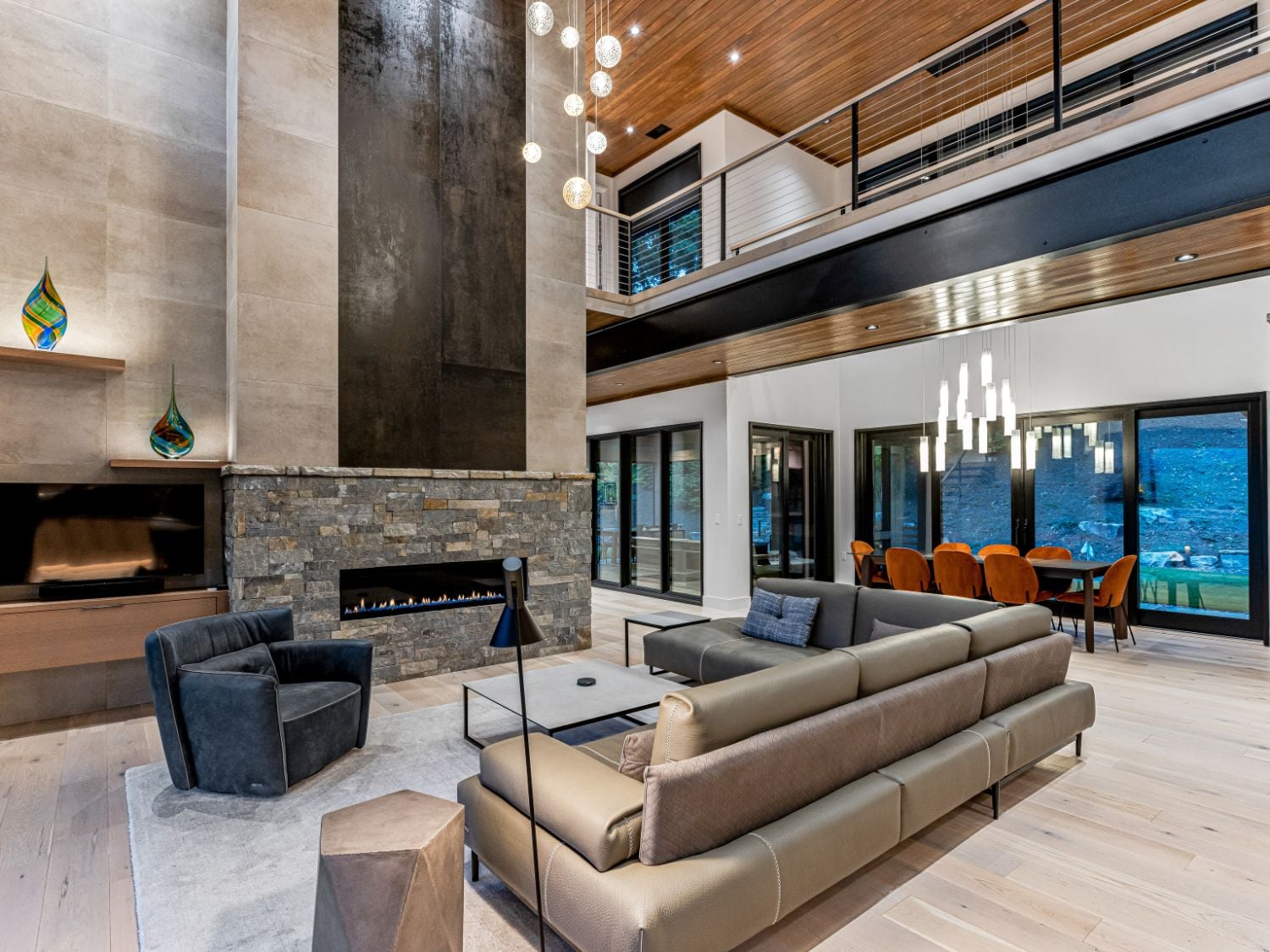
Depending on the firm, services may include programming, space planning, interior architectural drawings, elevations, cabinetry and closet design, lighting concepts, material and finish selections, plumbing and hardware specifications, renderings, furnishings, procurement, installation, and design coordination during construction.
Always compare scopes carefully.
Two proposals with very different fees may actually include very different amounts of work, so the lower number is not automatically the better value.
Why ID.ology Focuses on Wellbeing, Not Just Aesthetics
We believe the true measure of a home is not how it photographs. It is how it supports the people living there.
That means thinking about indoor air quality, lower-emitting materials, natural light, electric lighting, aging in place, storage, organization, ergonomics, maintenance, biophilic design, and the emotional comfort of a space alongside its aesthetics.
A home can be beautiful and still be frustrating to live in.
We want both, and that is why our team is trained to look past the surface on every project.
Frequently Asked Questions
What is the difference between a decorator and a trained interior designer?
A decorator typically focuses on finishes, furnishings, and visual style. A trained interior designer is educated in space planning, building systems, construction coordination, and often health and safety considerations, which allows them to guide a project through construction, not just style it once it is built.
Should I hire a designer before an architect or builder?
For a complex project, involving the core team early is often ideal. The designer, architect, and builder can then coordinate major decisions together rather than working sequentially in isolation.
Can I hire a designer if I already have a builder?
Yes. Designers regularly collaborate with existing builders and remodelers, and a designer with real construction experience should be comfortable working within that existing relationship.
What if I already know exactly what I like?
That can be a strong starting point. A well-trained designer can help refine the vision, test it against the architecture and budget, develop the technical details, and carry the concept through consistently from concept to installation.
Is an interior designer worth it for furnishings only?
It can be, especially when furnishing multiple rooms or buying investment pieces. Proper scale, layout, durability, fabric selection, procurement, and installation all influence the result, and those are exactly the skills a properly trained designer brings.
Design Well for Your Wellbeing
Whether you are still deciding if a designer is worth it, or you have already made that decision and are now comparing firms, the same principle applies.
Hiring an interior designer is worth it when the expertise, coordination, time savings, and risk reduction provide more value than the design fee itself, and choosing the right designer is what actually delivers on that value.
At ID.ology Interiors & Design, we believe our role is to help clients make informed decisions with fewer regrets and create homes that are beautiful, functional, healthy, and deeply personal.
That is what it means to Design Well for Your Wellbeing.
If you would like to talk through your project and see whether our team is the right fit, we would welcome the chance to connect in a consultation.