
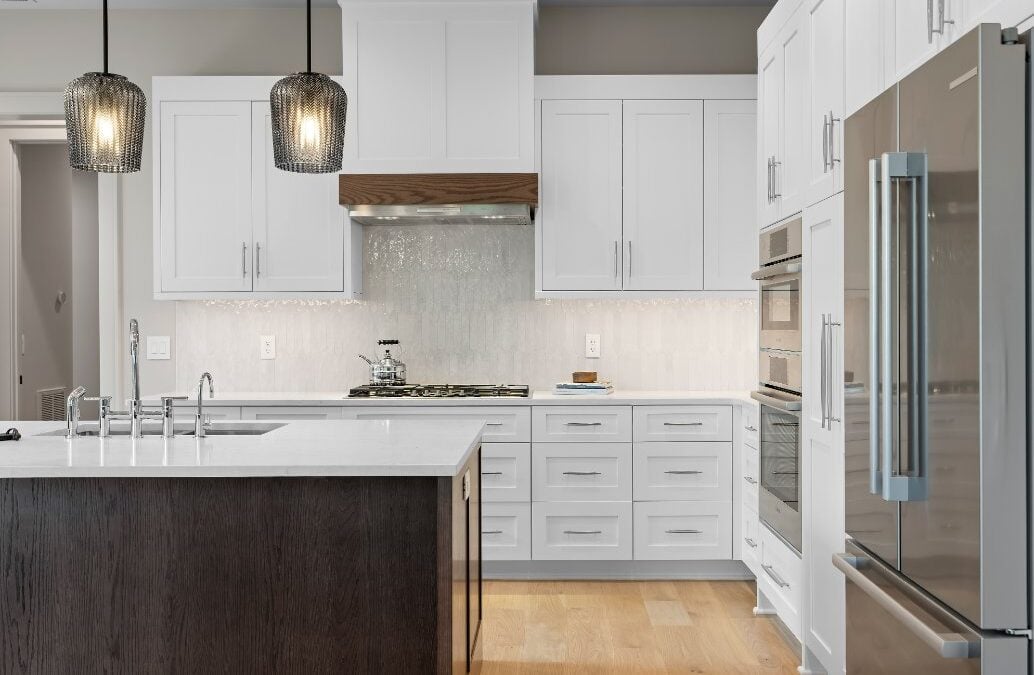
“What should my new cabinets cost?” is one of the first questions we hear from clients planning a kitchen update, and it deserves a clear answer.
In 2026, new kitchen cabinetry can range from several thousand dollars for basic stock cabinets to $35,000 to $70,000 or more for a professionally designed custom kitchen. Highly detailed luxury cabinetry can exceed that range.
At ID.ology Interiors & Design, we look at cabinetry as part of the architecture, storage, and everyday function of the home, not simply as boxes on a wall. That same thinking applies to kitchens, bathroom vanities, and custom closets.
Quick Answer
Current 2026 cabinet pricing guides commonly place installed stock cabinetry around $100 to $400 per linear foot, semi-custom cabinetry around $200 to $700 per linear foot, and fully custom cabinetry around $500 to $1,200-plus per linear foot. Luxury custom cabinetry with premium materials, inset construction, appliance panels, specialty interiors, and detailed finishes can reach $1,200 to $1,800-plus per linear foot.
These ranges are useful for early planning, but price per linear foot does not tell the whole story. Two kitchens with the same cabinet length can have very different costs depending on construction quality, finishes, storage features, installation, and design complexity.
Stock vs. Semi-Custom vs. Custom Cabinets
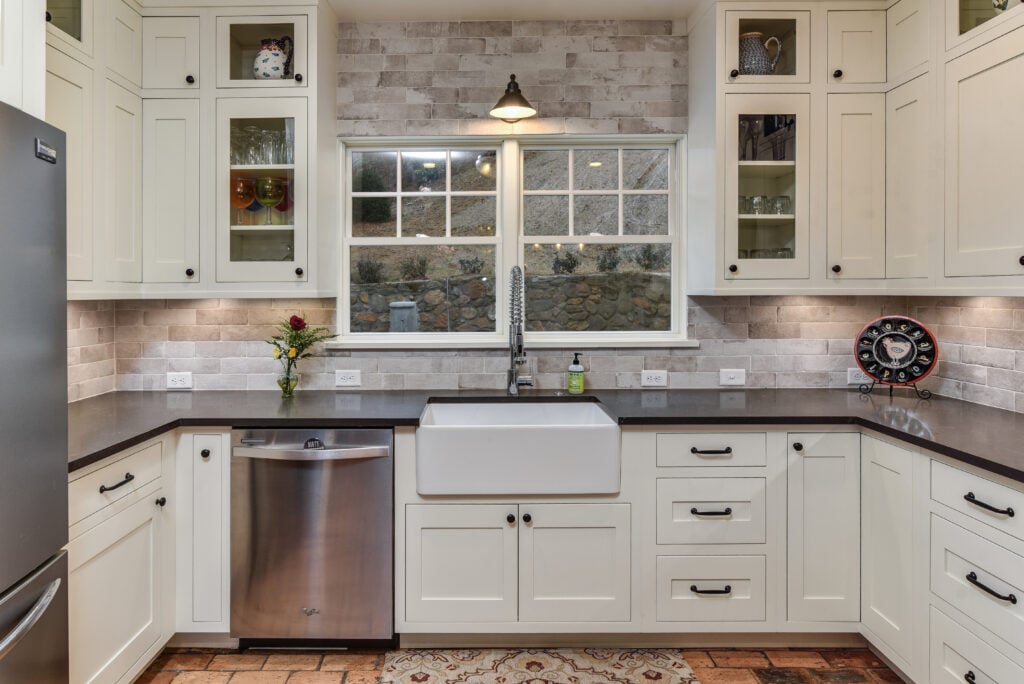
Stock Cabinets
Stock cabinetry is manufactured in predetermined sizes, styles, and finishes. It is usually the least expensive and fastest option.
It can work well for straightforward layouts, rental properties, secondary spaces, or budget-conscious renovations where standard sizes fit the room.
Semi-Custom Cabinets
Semi-custom cabinetry starts with a manufactured cabinet line but allows more flexibility in sizing, finishes, door styles, accessories, and modifications.
For many homeowners, it offers a good balance between design flexibility, quality, and cost.
Custom Cabinets
Custom cabinetry offers the greatest flexibility.
Cabinets can be designed around the exact architecture of the room, storage needs, appliance package, ceiling height, and overall design.
This is often the better fit for luxury kitchens, unusual layouts, highly tailored storage, or homes where the cabinetry needs to feel fully integrated with the architecture.
What Actually Makes Cabinets Expensive?
Several factors can increase kitchen cabinet cost.
Construction quality is one of the biggest. Plywood boxes, dovetail drawers, quality slides and hinges, durable finishes, and stronger joinery generally cost more than entry-level construction.
Door style also matters. A simple overlay slab door usually costs less than inset cabinetry, applied molding, specialty profiles, or hand-finished details.
Material choice affects price as well. Painted maple, white oak, walnut, rift-cut veneers, and other specialty woods can fall into very different price ranges.
Height and scale also matter. Cabinets extending to nine- or ten-foot ceilings require more material and often more installation labor.
Interior accessories can also increase the budget, including:
- Roll-out trays
- Tray dividers
- Spice storage
- Appliance lifts
- Drawer organizers
- Pull-out trash
- Blind-corner solutions
- Charging drawers
- Specialty hardware
Integrated appliances, custom panels, decorative ends, fillers, trim, crown, light rail, toe kicks, and scribing also add cost and may not be included in a low advertised cabinet price.
The Real Cost of Chasing the Lowest Price
The lowest cabinet price is not always the lowest long-term cost.
Lower-priced cabinetry often uses lighter construction, less durable hardware, and simpler finishes. These components may show wear sooner, especially in a kitchen that is used heavily every day.
Higher-quality cabinetry costs more upfront, but stronger construction and better hardware can extend the useful life of the kitchen significantly.
The same principle applies to style.
We usually encourage clients to choose door styles, finishes, and hardware that can age well rather than selecting something simply because it is trending. A timeless kitchen is more likely to feel right for years.
Two Cabinet Regrets We See Often
Painted Finishes in High-Use Areas
Painted cabinetry can be beautiful, but high-touch areas can show wear over time.
Touch-ups are possible, but they may not always match the surrounding finish perfectly. For homeowners who are highly detail-conscious, it is worth considering how painted cabinetry will age in the busiest parts of the kitchen.
Skipping Organizational Accessories Up Front
Another common regret is removing useful cabinet accessories from the original design to save money.
Roll-outs, specialty inserts, and interior organizers are usually easier and more cost-effective to integrate before the cabinetry is built and installed.
If an accessory will meaningfully improve how you use the kitchen every day, it is often worth including from the start.
Why One Cabinet Quote Can Be Double Another
Not every cabinet quote includes the same scope.
One proposal may include design, drawings, delivery, hardware, installation, fillers, panels, trim, and project coordination. Another may primarily cover the cabinet boxes.
Before comparing prices, check whether each quote includes:
- Cabinet box construction
- Drawer construction
- Hardware and soft-close mechanisms
- Door style and finish
- Finished end panels
- Interior accessories
- Decorative trim
- Delivery
- Installation
- Field measurements
- Design drawings and revisions
- Warranty and service
A lower quote may simply include less.
Our Approach to Custom Cabinetry
At ID.ology, our custom cabinetry is sourced through trusted vendors and designed around the specific space.
The cabinet lines we work with include David Bradley, Crestwood, Primary Kitchen, and Miralis. These lines can be customized down to the eighth of an inch, which allows the cabinetry to fit the room more precisely.
That level of customization can help cabinetry feel more integrated with the architecture instead of looking added afterward.
It does cost more than stock cabinetry, but for clients who need precise sizing, tailored storage, or a more built-in appearance, that flexibility can provide meaningful value.
Where Is It Worth Spending More?
We generally recommend investing in the parts of cabinetry you use every day.
That includes:
- Drawer quality
- Hinges
- Durable finishes
- Functional storage
- Good layout
- Accessible organization
- Proper installation
One of the most valuable upgrades is often better storage planning rather than a more expensive wood species or decorative detail.
A well-designed drawer stack can improve daily function more than a feature that looks impressive but does not solve a real problem.
Where Can You Save?
You may be able to reduce kitchen cabinet cost by:
- Choosing a simpler door style
- Limiting specialty finishes
- Using semi-custom cabinetry where full custom is unnecessary
- Reducing decorative trim
- Using specialty accessories only where they provide real value
- Keeping the overall layout straightforward
Good design should help you identify where customization matters and where a simpler solution will work just as well.
Why Cabinet Design Should Happen Early
Cabinetry affects plumbing, electrical, appliances, countertops, lighting, flooring transitions, clearances, and construction schedules.
Waiting too long to finalize the cabinetry can create expensive changes later.
At ID.ology, cabinetry is integrated into the overall design process. Our team coordinates cabinet design, specifications, ordering, delivery, and installation with the broader construction schedule so the cabinetry works with the rest of the home.
Healthy and Long-Term Cabinetry Considerations
Cabinetry should also support how you live over time.
We consider material choices, finishes, storage ergonomics, ease of use, aging-in-place needs, and organization.
A cabinet can look beautiful and still be frustrating if the drawers are too shallow, the trash pull-out is poorly placed, frequently used items are difficult to reach, or the pantry does not support the way you cook.
Good cabinetry should improve both the look and the daily function of the room.
Frequently Asked Questions
What Is the Real Difference Between Semi-Custom and Custom Cabinets?
Semi-custom cabinetry starts with a manufactured line and allows more flexibility in sizing, finishes, and accessories. Custom cabinetry is designed around the exact architecture, storage needs, and appliances of the room, which provides greater precision but usually at a higher cost.
How Long Should Quality Kitchen Cabinets Last?
Higher-quality cabinetry can last for decades when properly installed and maintained. Lower-cost cabinetry may show wear much sooner, so it is important to compare construction quality and hardware rather than looking only at the upfront price.
Does This Same Thinking Apply to Bathrooms and Closets?
Yes. The same principles of construction quality, thoughtful storage, durable finishes, and long-term function apply to bathroom vanities and custom closet systems as well as kitchen cabinets.
When Should I Start the Cabinet Design Process?
As early as possible, ideally before construction begins. Cabinetry affects plumbing, electrical, appliances, countertops, lighting, and clearances, so early planning gives you more flexibility and helps reduce costly changes later.
The Bottom Line
In 2026, kitchen cabinet cost can vary widely.
A practical planning range is roughly $100 to $400 per linear foot installed for stock cabinetry, $200 to $700 for semi-custom, and $500 to $1,200-plus for custom cabinetry, with luxury custom work sometimes reaching $1,200 to $1,800-plus per linear foot.
The goal is not to buy the most expensive cabinets. It is to choose the right level of construction, customization, storage, and design for the way you use your home.
At ID.ology Interiors & Design, we treat cabinetry as one of the hardest-working parts of the home. It should look beautiful, function well, and serve you for years.
2026 Cost Data Note
Pricing ranges reflect current national and Southeastern cabinet-cost guides published in 2026. Actual pricing varies by manufacturer, construction, materials, scope, installation, and project location.