
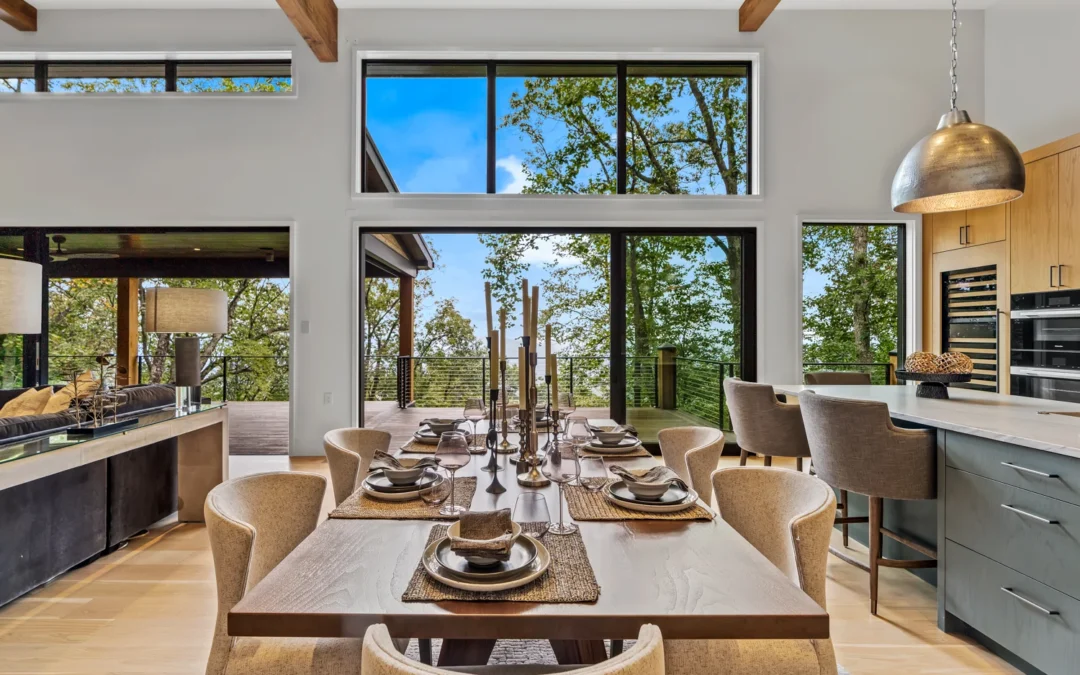
Look for mountain modern home designers who balance contemporary architecture with natural materials, comfortable furnishings, and a clear connection to the setting. Their portfolio should show how they adapt the style to different homeowners, rather than repeat the same finishes and furniture in every project.
At ID.ology Interiors & Design, our full-service interior design considers architecture, cabinetry, lighting, finishes, and furnishings together. We want the home to feel warm and personal, with each decision supporting how the homeowner lives.
Our work on Stoneridge Haven, Casa Bonita Mountain Ranch, and Southcliff Horizon shows how differently that approach can take shape. Each project draws on modern design, but each responds to its own architecture, setting, and client.
What Is Mountain Modern Design?
Mountain modern design brings contemporary forms into conversation with the natural environment. Clean lines, large expanses of glass, steel details, and streamlined cabinetry may sit alongside organic stone, stained wood, and tactile textiles.
The character often comes from the relationship between those materials. Smooth surfaces give rougher textures room to stand out. Wood can bring warmth beside steel, while upholstery can soften a room with substantial stone or glass.
In our work, we pay attention to how much visual weight each material carries. Stone, wood, and machined steel can work beautifully together, but their proportions matter as much as the selections themselves.
Why Does Material Balance Matter So Much?
Choosing attractive materials does not automatically create a comfortable room. The finish, sheen, texture, and quantity of each material affect the result.
Too much smooth drywall, polished surface, or uninterrupted hard material can leave a space feeling flat or cold. Heavy stone and wood can also overwhelm a room when they dominate the composition.
I look at these decisions across the whole project. A material that feels right in one room still needs to relate to the spaces around it.
Sheen and Texture
Reflective finishes behave differently from matte or textured surfaces. Even within a restrained palette, those differences can give a room depth.
When an interior feels too visually cool, introducing another color may not be the answer. The room may need more tactile texture, a different finish, or a better balance between hard and soft materials.
Scale and Proportion
A beautiful material can become distracting when it occupies too much of a room. In another setting, giving that same material more space may create the stronger result.
That is why we avoid treating mountain modern design as a fixed recipe. The architecture and the surrounding materials help determine what belongs where.
Why Should Architecture and Furnishings Be Planned Together?
Furnishings affect how the architecture feels to live in. They deserve consideration while the design is developing, rather than after every architectural decision has been made.
A room with large expanses of glass, concrete, steel, or smooth drywall may need softness through upholstery, rugs, drapery, and natural fibers. Those elements help balance the visual and sensory experience of the space.
An architecturally impressive room can still feel uncomfortable if every surface is hard, smooth, or visually cool. Furniture and textiles often provide the warmth that makes someone want to spend time there.
We consider the complete room from the beginning: its proportions, materials, lighting, cabinetry, furnishings, and daily use. That allows the architectural shell and the interior selections to support one another.
What Did Southcliff Horizon Teach Us About Using Stone?
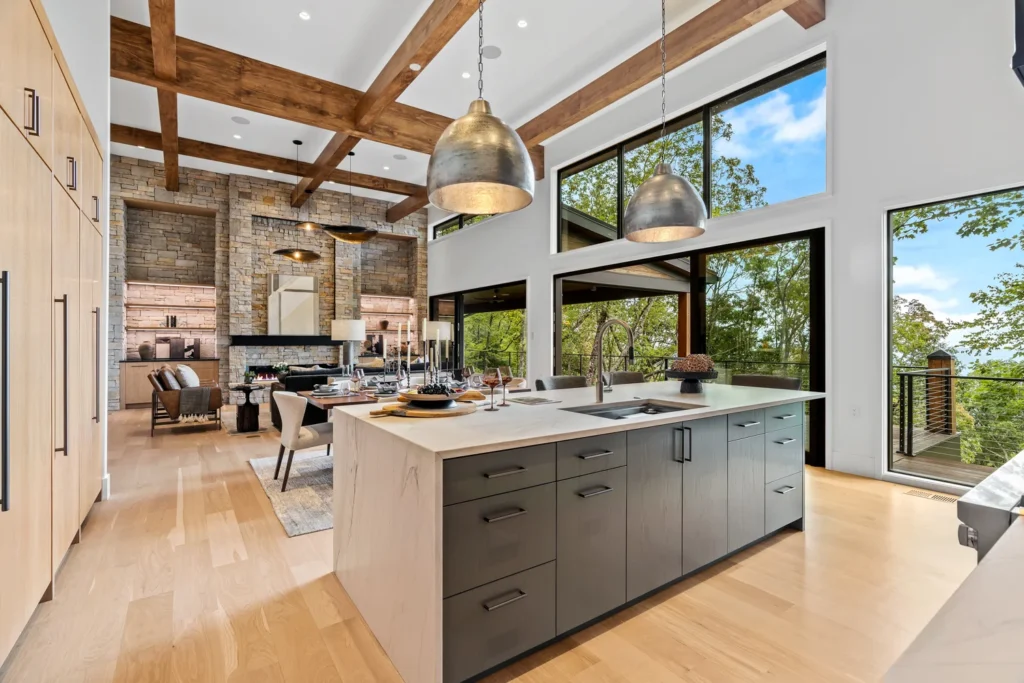
At Southcliff Horizon, the original fireplace-wall concept called for stone only on the center fireplace section. We reconsidered the wall as a full architectural composition.
We expanded the stone across the full-height wall and introduced changes in depth. Some areas were recessed, while others projected beyond the primary plane.
Those changes turned a straightforward fireplace surround into a sculptural focal point. The depth created shadow, dimension, and movement without requiring a busier material palette.
Creating Interest With One Material
The lesson was in how the stone was used. Its scale, proportion, and depth gave the wall its presence.
Adding more materials would not necessarily have improved it. Working more thoughtfully with one material created the visual interest the room needed.
Modern interiors often make these details especially visible. With fewer decorative elements competing for attention, the execution of a wall, transition, or material junction carries more weight.
How Do Our Mountain Modern Projects Differ?
Stoneridge Haven, Casa Bonita Mountain Ranch, and Southcliff Horizon share an interest in contemporary design and natural materials. Their finished interiors express those ideas differently.
Stoneridge Haven
Stoneridge Haven shows how refined contemporary details can work alongside warmth, texture, and natural influence.
The goal was to let the tailored and organic elements support one another. The interior could feel contemporary while remaining comfortable and inviting.
Casa Bonita Mountain Ranch
Casa Bonita Mountain Ranch reflects a strong relationship between the home and its setting.
Natural textures and materials help ground the modern elements, connecting the interior to the surrounding environment. The setting informs the design rather than becoming something seen only through the windows.
Southcliff Horizon
Southcliff Horizon demonstrates how material proportion and sculptural form can shape a modern interior.
The fireplace wall is one example of using depth and dimension to create interest while keeping the overall design clean. It illustrates how much can change when a familiar material is considered at the scale of the whole room.
Should Your Home Reflect Your Designer’s Signature Style?
A recognizable signature style can help homeowners identify a designer whose work they enjoy. For custom residential design, though, I believe the designer also needs the ability to adapt.
Your taste, lifestyle, architecture, and setting should guide the home. Professional guidance should help you develop your vision and make informed decisions about it.
That matters when a project represents years of planning, whether it is a second home, retirement home, new build, or major renovation. The finished rooms should feel right for the people who will use them.
When comparing firms, look for variation within their portfolios. Our guide to choosing luxury interior designers in the Southeast explains other questions worth asking about experience, communication, and the design process.
What Makes a Modern Home Feel Cold?
Modern design can feel warm and comfortable. When it feels cold, I often find that the issue is imbalance.
There may be too many smooth surfaces, overly reflective finishes, too little wood, rigid upholstery, or lighting that feels harsh. Sometimes one material simply dominates more of the room than it should.
The answer depends on the space. It may involve changing a finish, introducing tactile furnishings, or adjusting the amount of texture.
Connecting the Interior to Its Setting
Natural elements can also help a contemporary interior feel more connected to its surroundings. Stone, wood, natural fibers, and views can contribute without making the room feel heavily rustic.
Our article on bringing nature into your Asheville home explores this connection further.
What Should You Ask a Mountain Modern Interior Designer?
Ask how the designer has interpreted the style for different clients. Then go beyond the finished photographs and discuss the decisions behind them.
Useful questions include:
- How do you balance stone, wood, steel, and glass?
- When do you begin planning furnishings?
- How do you evaluate texture, sheen, and material proportions?
- How do the architecture and setting influence your recommendations?
- Can you show projects with different interpretations of modern design?
- How do you adapt the design when a client’s preferences differ from your initial ideas?
Listen for explanations that relate to specific projects. A designer should be able to describe why a material was used, what the room needed, and how the decision supported the homeowner.
How Does Mountain Modern Design Support Wellbeing?
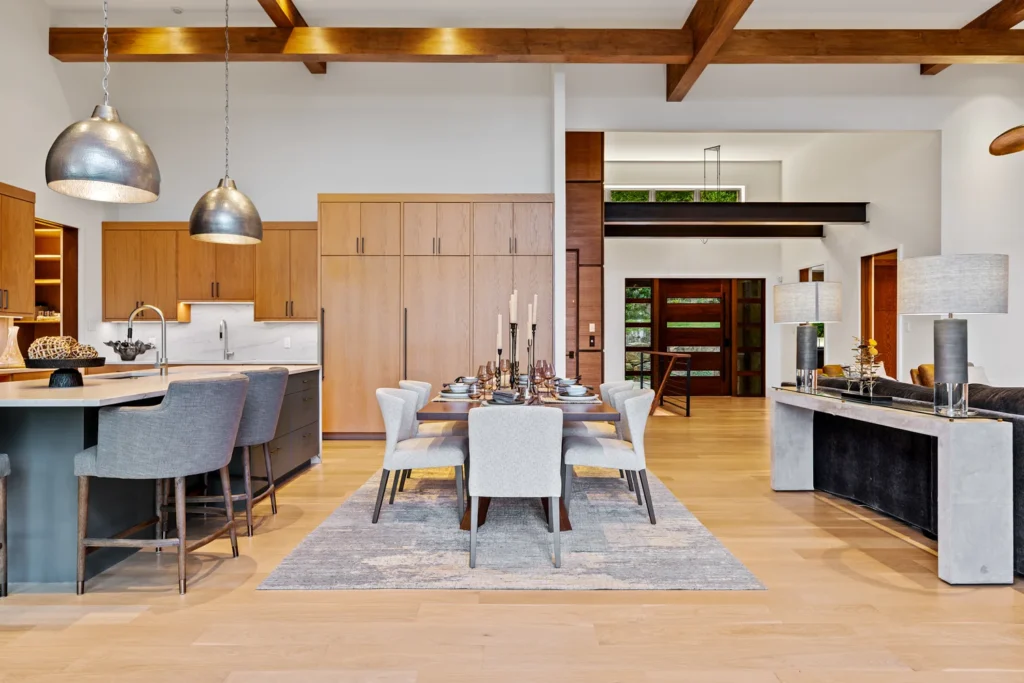
For us, a successful modern home feels good to live in. Materials have enough contrast to create interest without competing for attention, and furnishings make the rooms comfortable to use.
We also consider how natural elements connect the interior to its environment. The balance should make sense for the homeowner’s preferences and daily experience.
This is what Design Well for Your Wellbeing means in our mountain modern work. A room can be visually striking while still being somewhere you feel at ease.
What Else Should You Know About Mountain Modern Homes?
How is mountain modern different from rustic design?
Mountain modern generally uses cleaner lines, simpler forms, and more restrained detailing. It can share natural materials with rustic design, but their finish, proportion, and relationship to contemporary elements change the overall effect.
Does mountain modern design require a neutral palette?
No. The palette should reflect the homeowner and the setting. The balance of materials, texture, sheen, and proportion matters more than following a prescribed set of colors.
Can mountain modern interiors feel cozy?
Yes. Upholstery, rugs, textiles, natural fibers, wood, and considered lighting can soften a room with substantial glass, steel, or stone. Planning those elements alongside the architecture helps them feel part of the room.
Should I choose furnishings before construction is finished?
Furnishings should be considered during design, even if final purchasing happens later. Their scale, placement, and texture affect how the room functions and how its architectural materials feel together.
How do I choose a mountain modern home designer?
Look for relevant experience, a portfolio with variation, and clear explanations of design decisions. Ask how the designer responds to the client, architecture, and setting, and how they coordinate finishes and furnishings throughout the project.
Ready to Plan Your Mountain Modern Home?
Tell ID.ology Interiors & Design about your property, the way you want to live, and the modern interiors you’re drawn to.
We’ll help you consider how materials, furnishings, and architectural details can come together in a home that feels comfortable and personal.