
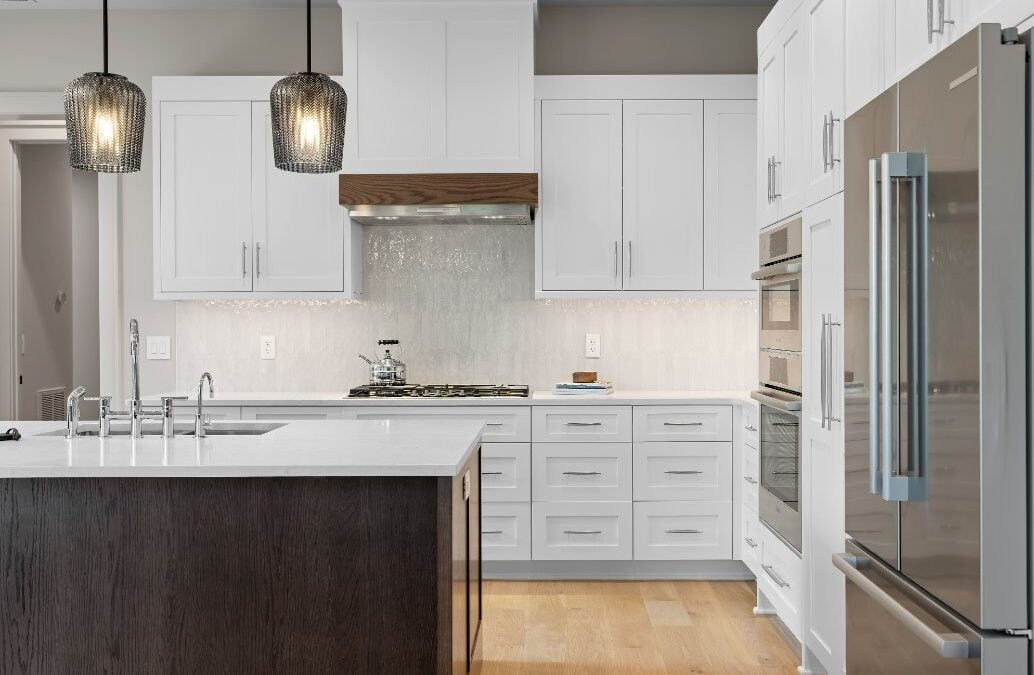
The Short Answer
Asheville and Western North Carolina have a strong cabinetry market, with options ranging from local custom woodworkers and millwork shops to kitchen-and-bath showrooms, cabinet dealers, remodeling companies, and full-service interior design firms with in-house cabinetry services.
The right company depends on what you actually need.
If you already have finalized architectural drawings and simply need cabinets fabricated, a custom cabinetmaker may be a good fit. If you want to compare manufactured cabinet lines at different price points, a cabinetry showroom may make sense. If you need the cabinetry integrated with the overall interior design, appliances, lighting, finishes, storage planning, and construction details, a full-service design-and-cabinetry firm can provide a more comprehensive approach.
ID.ology Interiors & Design falls into that last category. We design, specify, order, coordinate, and oversee cabinetry installation as part of a larger interior design process. Our guiding principle is Design Well for Your Wellbeing: cabinetry should be beautiful, but it should also improve organization, ergonomics, function, and everyday living.
Cabinet Companies Serving the Asheville Area
The following examples illustrate the different kinds of cabinetry resources available locally. This is not a ranking, and the best choice depends on your project’s scope and priorities.
ID.ology Interiors & Design, Asheville
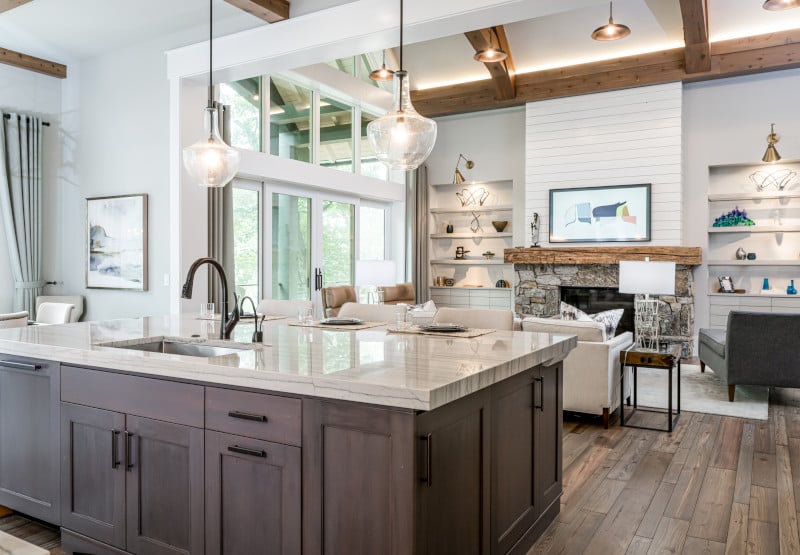
ID.ology provides custom and semi-custom cabinetry as part of a comprehensive interior design service. The team handles cabinetry design, drawings, product selection, ordering, coordination, and installation oversight for kitchens, baths, mudrooms, bars, built-ins, closets, and other spaces.
The advantage of this model is integration: cabinetry decisions are coordinated with the architecture, appliances, plumbing, lighting, countertops, finishes, furniture plans, and wellness goals rather than treated as a separate purchase.
Asheville Cabinetry and Millwork, Asheville
This local custom woodworking shop focuses on custom cabinetry and fine woodworking. A shop like this can be a strong fit for clients seeking one-of-a-kind fabrication or specialty millwork.
Atwood: Fine Architectural Cabinetry, Asheville
Atwood serves the Asheville market with custom cabinetry and renovation-focused services. This type of provider may appeal to clients seeking architectural cabinetry with a high level of craftsmanship.
Forest Millwork & Cabinet Design Studio, Asheville / Weaverville
Forest Millwork combines kitchen-and-bath cabinet design with architectural and commercial millwork capabilities. Its local design studio provides another option for homeowners looking for cabinetry and specialty woodworking.
Heritage Kitchens, Asheville
Heritage Kitchens provides kitchen and bath cabinetry, countertops, and design services. Showroom-based providers can be useful when homeowners want to see cabinet and finish options in person.
HomeSource Design Center, Asheville
HomeSource offers cabinetry along with countertops, flooring, tile, and other finish materials, giving homeowners the ability to coordinate multiple product categories in one showroom.
CornerStone Interiors WNC, Asheville
CornerStone combines cabinetry, flooring, interior design support, and remodeling-related services. This can be useful for homeowners looking for several finish categories from one source.
Atlas Kitchen & Bath, Asheville
Atlas focuses on kitchen-and-bath remodeling and finish products, including custom and semi-custom cabinetry, countertops, and tile.
CDI Cabinets, Fletcher / Greater Asheville
CDI offers cabinetry design and installation with multiple cabinet lines. Dealer-based showrooms like this can provide a wide range of styles, construction levels, and price points.
Nova Kitchen & Bath, Arden
Nova has served the Western North Carolina market for decades and carries multiple cabinetry brands along with countertops and decorative hardware.
What Type of Cabinet Company Do I Need?
There are four common models.
- Custom cabinetmaker: Best when you want highly individualized fabrication, unusual dimensions, specialty woodwork, or architectural millwork.
- Cabinet dealer or showroom: Best when you want to compare manufactured cabinet brands, door styles, finishes, and pricing tiers.
- Kitchen-and-bath remodeler: Best when cabinetry is part of a construction project and you want one company involved with both cabinets and remodeling.
- Full-service interior design and cabinetry firm: Best when the cabinetry needs to integrate seamlessly with the entire home and you want one design team coordinating layout, aesthetics, function, materials, and other project decisions.
None of these models is universally better. The important thing is knowing which problem you are trying to solve.
Questions to Ask Every Cabinet Company
Before comparing proposals, ask:
- Who is actually designing the cabinetry?
- Will I receive detailed elevations and drawings?
- Is the cabinetry stock, semi-custom, fully custom, or a combination?
- What is the cabinet-box construction?
- How are drawers constructed?
- Which hinges and slides are included?
- Are finished end panels and trim included in the quote?
- Is delivery included?
- Who installs the cabinetry?
- Who performs the final field measurement?
- What happens if a cabinet arrives damaged or does not fit?
- How are appliance specifications coordinated?
- Who coordinates plumbing and electrical locations?
- What storage accessories are available?
- How is warranty service handled?
The answers often explain why one quote is higher than another.
Why the Lowest Cabinet Quote Is Not Always the Lowest Project Cost
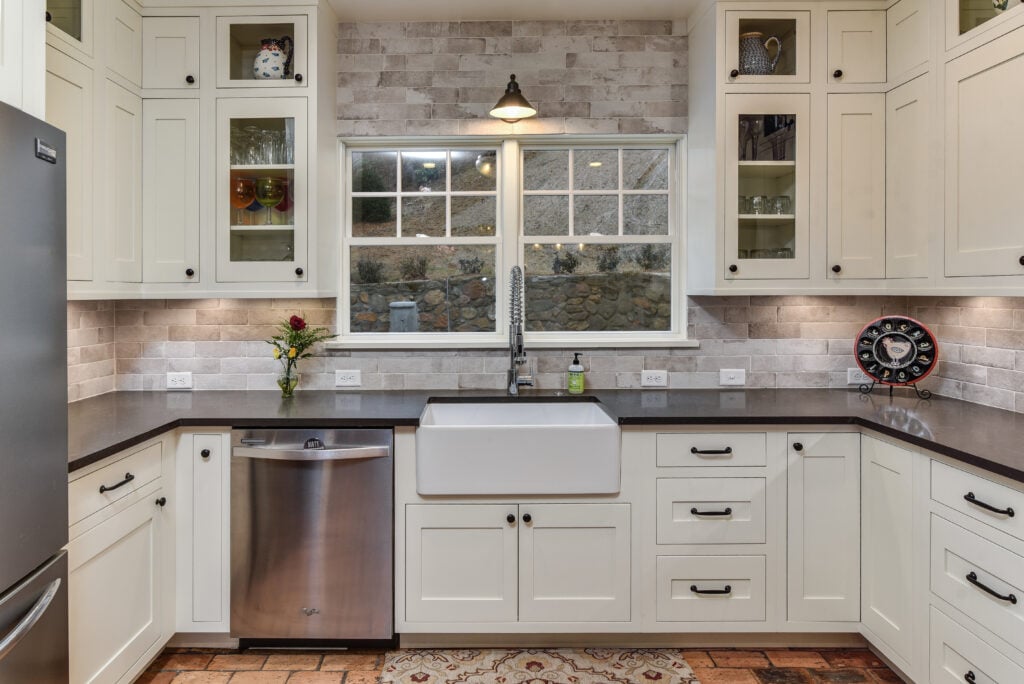
Cabinet pricing can be difficult to compare because proposals may include different things.
One company may quote cabinetry only. Another may include design drawings, field measurements, delivery, installation, panels, molding, hardware, and project coordination.
A lower initial quote can become more expensive if key items are added later, or if errors create rework for the installer, countertop fabricator, electrician, plumber, or appliance installer.
Ask for an apples-to-apples scope before making a decision based on price.
What Makes ID.ology’s Cabinetry Approach Different?
Our cabinetry department is integrated with our interior design team. That matters because cabinets affect almost every other decision in a kitchen or bath.
We consider:
- How you move through the space
- What needs to be stored and where
- Appliance clearances
- Countertop relationships
- Lighting
- Electrical locations
- Plumbing
- Interior architecture
- Material and finish coordination
- Aging-in-place needs
- Ergonomics
- Healthy-material goals
- Overall home aesthetic
For example, a kitchen can have expensive cabinets and still be frustrating if frequently used items are stored in the wrong place, drawers conflict with appliances, trash is inconveniently located, or the island is too large for comfortable circulation.
Design is what turns cabinetry from a product into a solution.
Why Two Cabinet Quotes Can Look Similar but Deliver Very Different Results
One of the biggest mistakes homeowners make when comparing cabinet companies is looking primarily at price without understanding the details behind the number.
Cabinetry can be designed, constructed, finished, and installed at very different quality levels. Two proposals may appear similar until you look closely at what is actually included.
For example, one design may rely heavily on filler pieces to absorb dimensional differences, while another is carefully planned so the cabinetry fits the space with greater precision. One proposal may include finished end panels, appliance panels, light rail, crown molding, and finished cabinet bottoms. Another may use unfinished skins or leave those details to be addressed later.
Even under-cabinet lighting can reveal a difference in quality. At a higher level of detailing, the lighting can be intentionally routed into a finished bottom panel so the source is integrated cleanly rather than simply attached to an unfinished underside.
Door construction also matters. Framed versus frameless cabinetry, partial overlay, full overlay, and inset doors each create a different look, construction method, and price point.
The important question is not simply, “What does this cabinet package cost?” It is, “What level of design, construction, detailing, and installation does this price actually represent?”
Case Study: Casa Bonita California Mountain Ranch
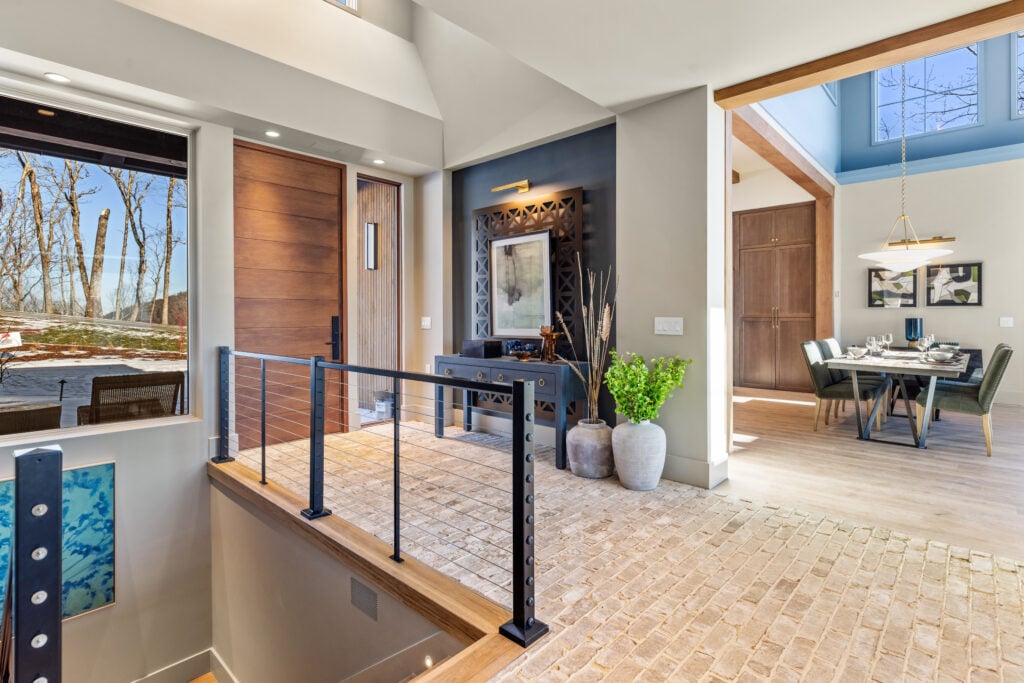
In our Casa Bonita California Mountain Ranch project, the cabinetry had to be coordinated carefully with appliances, plumbing, lighting, countertops, and circulation.
One of the most detailed conditions was the entrance to the walk-in pantry, or butler’s pantry. Rather than using a standard door surrounded by cabinetry, we designed the pantry entrance to be integrated into the cabinetry itself.
That kind of detail can look effortless when it is finished, but the planning is anything but casual. Panel widths, clearances, surrounding cabinetry, appliances, countertops, and circulation all had to be coordinated to fractions of an inch so the entrance aligned correctly and the cabinetry read as one continuous composition.
This is where cabinetry becomes part of the architecture of the room rather than simply a collection of boxes installed along a wall.
What You Cannot See May Matter Most
Homeowners naturally focus on cabinet doors, colors, finishes, and hardware because those are the elements they see first.
But some of the most important quality differences are inside the cabinetry and behind the finished surfaces.
The construction of the cabinet box matters. Drawer construction matters. The quality of drawer slides, hinges, and other mechanisms matters because those components affect how the cabinetry performs over time.
Material composition matters, too.
Cabinetry can be one of the larger material systems installed throughout a home, so ID.ology also considers its potential impact on indoor air quality. Composite materials, plywoods, particleboard, adhesives, stains, and finishes can vary substantially in quality and emissions.
For us, cabinetry quality is therefore not only about appearance. It is also about durability, construction, long-term performance, and the health characteristics of the materials being brought into the home.
Why ID.ology Is Different from a Traditional Cabinet Company
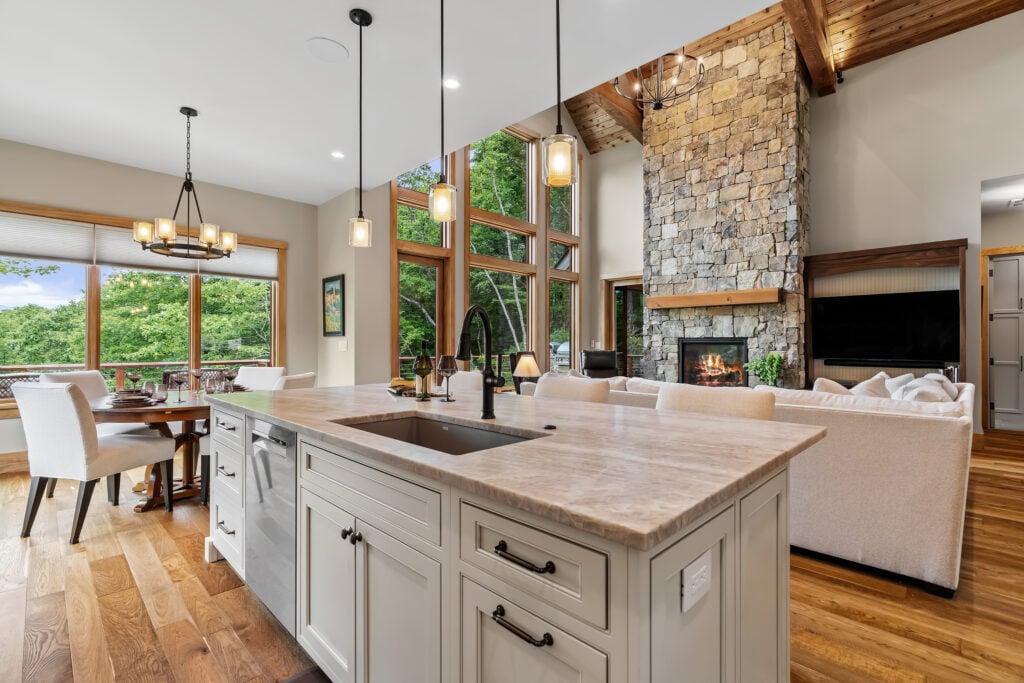
ID.ology Interiors & Design is an interior design firm with an integrated cabinetry and closets division.
That structure changes the way we approach cabinetry.
Rather than designing the interiors of a home and then handing the cabinet scope off as a separate, disconnected subcontract, our interior designers consider cabinetry as part of the overall design of the home.
We are looking at the architecture, furnishings, lighting, plumbing, appliances, materials, circulation, color palette, storage needs, wellness goals, and visual relationships at the same time.
That allows us to bring a higher level of design thinking to the cabinetry while also creating a clearer point of accountability for the product we specify, the quality we expect, the installation oversight we provide, and the healthy characteristics we consider.
For the client, the benefit is cohesion. The cabinetry is not a separate layer competing with the rest of the design. It is part of one comprehensive design solution.
The Questions We Wish More Homeowners Would Ask
Before choosing a cabinet provider, we highly recommend asking for homeowner references and builder references.
Photos can show you what a finished kitchen looks like. References can tell you what it was like to get there.
We also recommend asking to see the company’s cabinetry drawings and asking how detailed those drawings become before anything is ordered.
Why does that matter?
Because drawings can omit details that a homeowner may not realize are missing until the cabinetry is already installed. The difference between a general cabinet plan and a highly developed set of elevations and details can become very apparent in the field.
At ID.ology, our goal is to avoid surprises upfront by intentionally designing each part of the cabinetry rather than relying on fillers, gaps, or field adjustments as a buffer for imprecision.
We also site measure after drywall is installed and framing is complete. Architectural plans are essential, but the built home can vary from the drawings. Measuring the actual finished conditions allows the cabinetry to be coordinated to the home that exists in the field rather than relying only on theoretical dimensions.
That additional step can help prevent fit problems, unnecessary filler, awkward gaps, and last-minute compromises.
A Better Way to Compare Cabinet Companies
When comparing cabinet companies near Asheville, do not compare only door style and price.
Compare:
- The level of detail in the drawings.
- The construction of the cabinet boxes and drawers.
- The quality of slides, hinges, and hardware.
- Whether exposed ends and bottoms are properly finished.
- How fillers and gaps are handled.
- How lighting is integrated.
- How appliances are framed and paneled.
- Whether crown, light rail, and trim are included.
- How plumbing and electrical are coordinated.
- Whether the provider measures the actual built conditions before ordering.
- Who is accountable for installation quality.
- How healthy-material considerations are addressed.
- Whether cabinetry is being designed as part of the room, or simply sold as a product.
The lowest quote may not represent the lowest total project cost, and the most expensive quote is not automatically the best.
The goal is to understand what you are truly buying.
How Much Should Cabinets Cost?
In 2026, published cabinet-cost guides commonly show broad installed ranges of approximately $100–$400 per linear foot for stock cabinetry, $200–$700 for semi-custom, and $500–$1,200+ for fully custom cabinetry, with elaborate luxury work exceeding those ranges.
Those numbers are only planning benchmarks. Cabinet construction, wood species, finish, door style, interior accessories, ceiling height, appliance panels, trim, delivery, and installation can all affect the actual price.
When Should I Start Cabinet Design?
Earlier than most homeowners expect.
Cabinetry should be developed before plumbing and electrical rough-ins are finalized and before appliance, countertop, and lighting decisions are locked in. On new construction and major renovations, early cabinet planning reduces the likelihood of conflicts and expensive changes later.
The Bottom Line
There are many reputable cabinet companies near Asheville, and the strongest choice depends on whether you need fabrication, product selection, remodeling, or a fully integrated design process.
If cabinetry is one piece of a larger custom home or renovation, consider how well the cabinet provider will coordinate with everything surrounding it, not just how attractive the cabinet door looks in the showroom.
At ID.ology Interiors & Design, Design Well for Your Wellbeing means creating cabinetry around the people using it. We combine design, function, storage, healthy-home thinking, and installation coordination so the finished space works as beautifully as it looks.
Research Note: Local businesses and service descriptions were reviewed against current 2026 business listings and company information. This article is intended as an educational comparison of provider types, not a ranked endorsement.